Uncategorized
Water Damage Drywall Repair Orange County: 7 Mistakes Property Managers Make (And How Emergency Response Saves Thousands)
Jan
Water damage in Orange County properties can transform from a minor inconvenience into a financial disaster faster than you might imagine. As a property manager, you’re standing at the front lines of what could become a costly catastrophe or a manageable repair situation. The difference often comes down to the decisions you make in those critical first hours and days after discovering water intrusion.
In this comprehensive guide, we’ll walk you through the seven most common mistakes property managers make when dealing with water damage drywall repair situations. By understanding these pitfalls and implementing emergency response strategies. Each mistake we’ll explore has the potential to turn a $500 repair into a $10,000+ reconstruction project.
The stakes couldn’t be higher. Orange County’s unique climate conditions, combined with the region’s diverse housing stock and strict building codes, create specific challenges that require immediate and informed action. You’ll gain valuable insights into not just what can go wrong.
I. The Delay Trap: Why “Wait and See” Costs Thousands
The most devastating mistake property managers make is delaying immediate action when water damage occurs. This seemingly harmless decision to “assess the situation” or “wait for the insurance adjuster” can multiply repair costs exponentially within just 24-48 hours.
Water doesn’t pause its destructive work while you’re making phone calls or scheduling appointments. Within the first few hours, moisture begins penetrating deeper into drywall materials, insulation, and structural components. What starts as surface-level damage quickly becomes a comprehensive reconstruction project requiring extensive material removal and replacement.
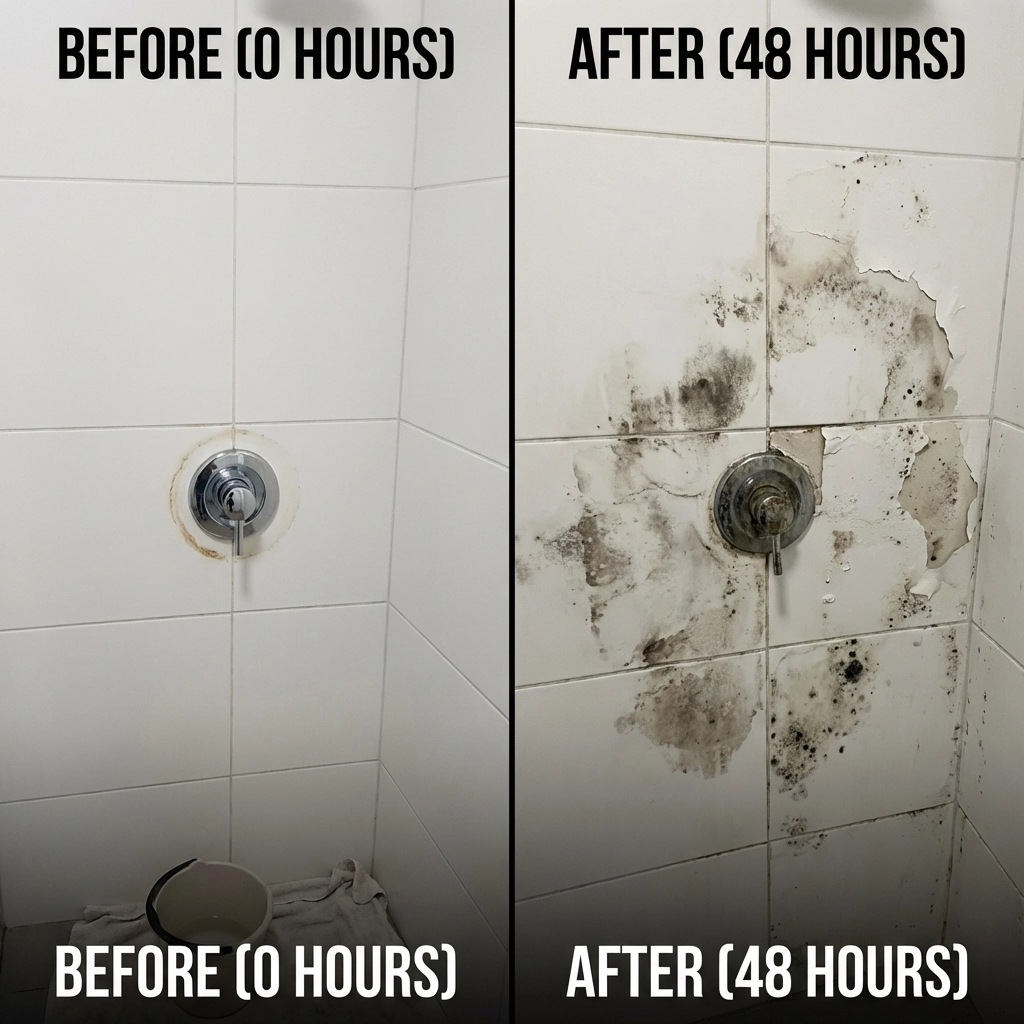
Consider this scenario: A small pipe leak behind a bathroom wall initially affects just a few square feet of drywall. If addressed immediately, the repair might involve cutting out a 2×2 foot section and patching with new material: a $300-500 job. However, after 48 hours of continued moisture exposure, that same leak can saturate insulation, compromise adjacent rooms, and create conditions for mold growth. The repair cost suddenly jumps to $5,000-8,000 for complete wall reconstruction and mold remediation.
The key is establishing an immediate response protocol. When water damage is discovered, your first call should be to a professional drywall repair service that offers emergency response. Don’t wait for “normal business hours” or try to assess the extent yourself. Time is literally money in these situations.
II. The Visible Damage Illusion: Missing Hidden Destruction
Property managers frequently make the critical error of addressing only the visible water damage while ignoring the hidden destruction occurring behind walls and within structural cavities. This surface-level approach almost guarantees future problems and significantly higher long-term costs.
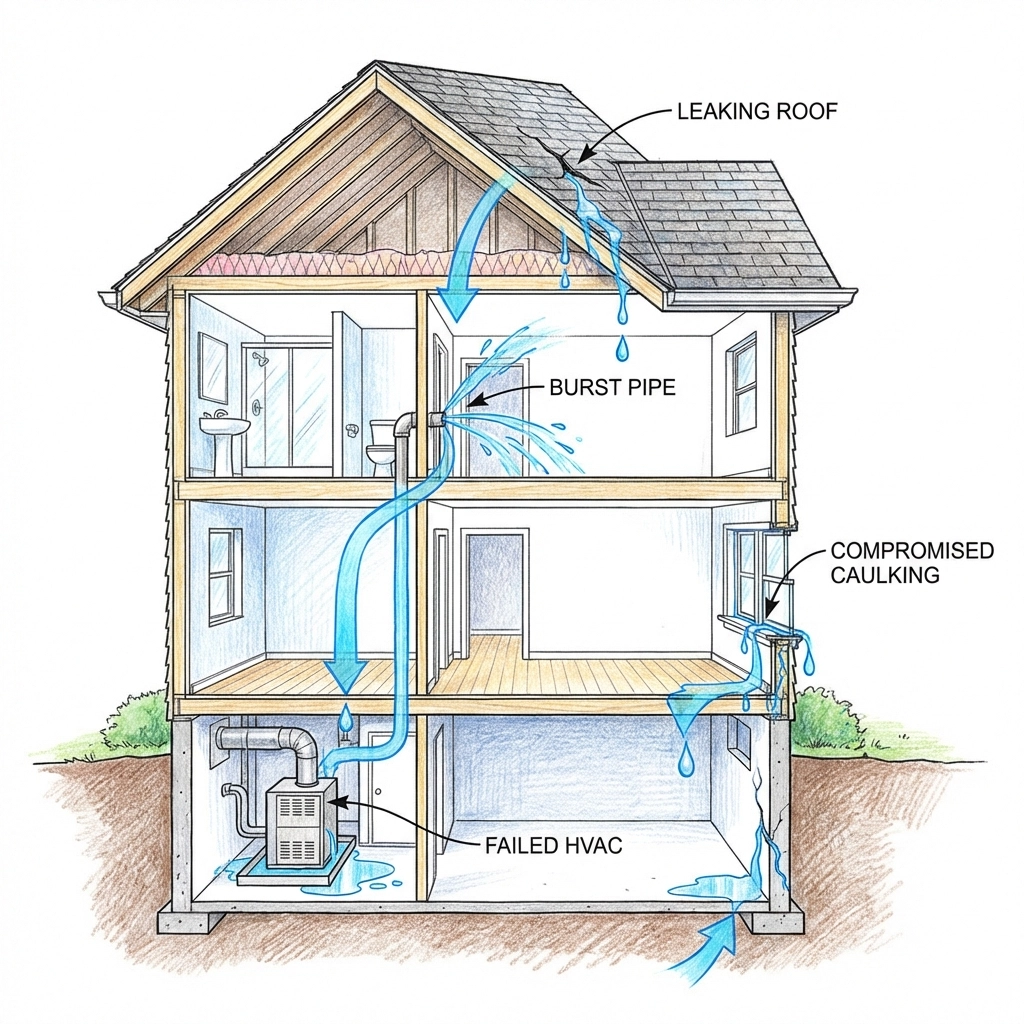
Water follows the path of least resistance, which means it travels through wall cavities, along electrical conduits, and into spaces you can’t see without specialized equipment. By the time water stains appear on visible surfaces, moisture has typically been present in hidden areas for hours or even days, causing extensive unseen damage.
Professional water damage assessment requires diagnostic tools like infrared cameras, moisture meters, and hygrometers to detect hidden moisture pockets. These instruments reveal the true scope of water intrusion.
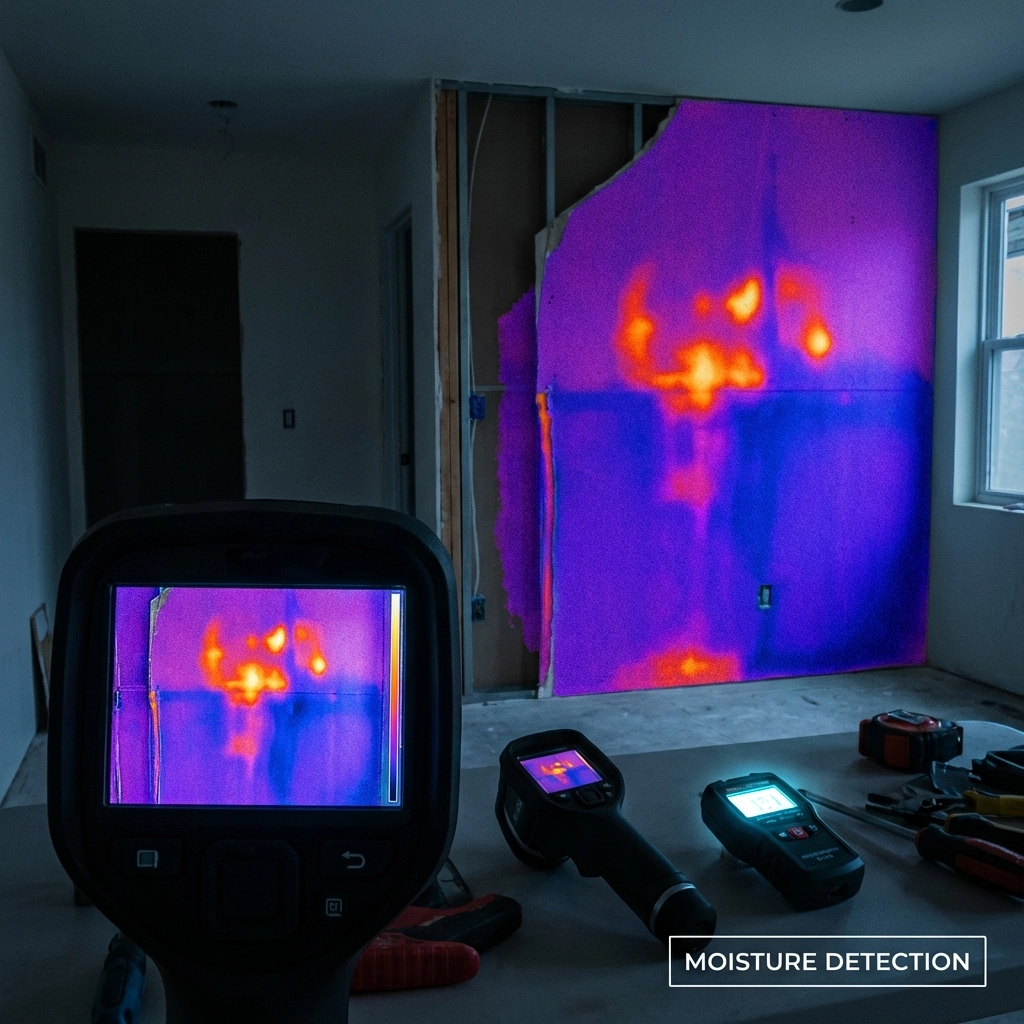
The hidden dangers include saturated insulation that loses its R-value and promotes mold growth, electrical systems exposed to moisture creating fire hazards, and structural wood components that weaken over time. Addressing only visible damage leaves these problems to compound, often resulting in emergency situations that could have been prevented with thorough initial assessment.
III. Source Ignorance: Treating Symptoms Instead of Causes
A fundamental mistake that guarantees recurring problems is failing to identify and address the moisture source before beginning drywall repairs. This approach treats symptoms rather than causes, leading to repeated damage cycles and frustrated tenants.
Common moisture sources include HVAC system leaks, roof penetrations, failed plumbing connections, inadequate exterior caulking, and poor ventilation systems. Each requires specific solutions that must be implemented before drywall restoration begins. Otherwise, you’re essentially applying expensive bandages to wounds that continue bleeding.
The investigation process requires systematic evaluation of potential water entry points. Start with the most obvious sources near the damage location, then expand your search to include indirect pathways where water might travel before manifesting as visible damage. This thorough approach prevents the costly cycle of repeated repairs to the same area.
For example, if drywall damage appears near a bathroom, don’t assume it’s from shower splash or humidity. The actual source might be a slow leak in the wall cavity from a loose fitting that’s been saturating materials for weeks. Fixing only the drywall without addressing the plumbing issue guarantees the problem will return within months.
IV. Communication Breakdown: Poor Landlord Coordination
Effective communication with property owners is crucial for timely water damage response, yet many property managers struggle to convey urgency and technical details in terms landlords understand. This communication gap leads to delayed approvals, inadequate repair budgets, and frustrated relationships.
The challenge lies in translating technical water damage terminology into clear, actionable business language. Landlords need to understand not just what happened, but why immediate action saves money compared to delayed response. They require specific timelines, cost estimates, and consequences of various decision options.
Successful communication involves providing landlords with a step-by-step repair timeline that includes costs, tenant displacement considerations, and potential complications if action is delayed. Present options with clear cost differentials between immediate professional response and delayed DIY approaches.
For instance, explain that immediate professional intervention costing $2,000 prevents potential mold remediation expenses of $8,000-12,000 if moisture remains untreated for a week. Frame decisions in terms of property value protection and liability reduction rather than just repair costs.
V. Legal Liability: Inadequate Tenant Notification
Property managers often overlook legal notification requirements when responding to water damage emergencies, creating potential liability issues and tenant relations problems. Orange County has specific laws governing landlord entry rights and tenant notification procedures that must be followed even during emergency repairs.
The legal framework requires appropriate notice before entering units for inspections and repairs, except in genuine emergency situations where immediate entry is necessary to prevent property damage or safety hazards. Understanding these distinctions is crucial for avoiding contract violations and potential legal disputes.
Emergency situations that justify immediate entry include active leaks threatening electrical systems, structural damage risks, or conditions posing immediate health hazards. However, follow-up inspections and non-urgent repairs typically require 24-48 hour written notice depending on local ordinances.
Document all communications with tenants regarding water damage incidents, including initial notifications, repair timelines, and any temporary relocations required. This documentation protects both property managers and landlords while demonstrating good faith efforts to minimize tenant disruption.
VI. Climate Ignorance: Failing Orange County-Specific Conditions
Orange County’s unique climate and environmental factors significantly impact water damage repair strategies, yet many property managers apply generic approaches that fail to account for local conditions. This oversight leads to incomplete moisture removal and recurring problems.
The region’s coastal humidity, seasonal weather patterns, and temperature variations affect drying rates and moisture retention in building materials. High humidity levels can prevent effective moisture evaporation, trapping water in wall cavities and insulation long after surface repairs are completed.
Professional water damage restoration in Orange County requires climate-adjusted drying strategies that may include dehumidification equipment. Standard approaches used in drier climates often prove inadequate for complete moisture removal.

Additionally, Orange County’s earthquake building codes and construction methods create unique considerations for drywall repair and replacement. Understanding local building requirements ensures repairs meet code standards and maintain structural integrity.
VII. Prevention Neglect: Skipping Proactive Maintenance
The most expensive mistake property managers make is neglecting preventive maintenance that identifies potential water damage sources before they become emergencies. This reactive approach costs significantly more than proactive property monitoring and maintenance programs.
Regular roof inspections, gutter cleaning, HVAC system maintenance, and plumbing checks can identify minor issues before they cause major water damage. A quarterly maintenance schedule typically prevents 80-90% of water damage incidents through early problem detection and correction.
Key prevention strategies include seasonal roof and exterior inspections. These proactive measures cost a fraction of emergency water damage repairs while extending overall property life and value.
How Emergency Response Saves Thousands
Professional emergency water damage response provides immediate cost savings through rapid moisture removal, comprehensive damage assessment, and prevention of secondary damage like mold growth. The investment in professional services during the first 24 hours typically prevents 3-5 times that amount in future repair costs.
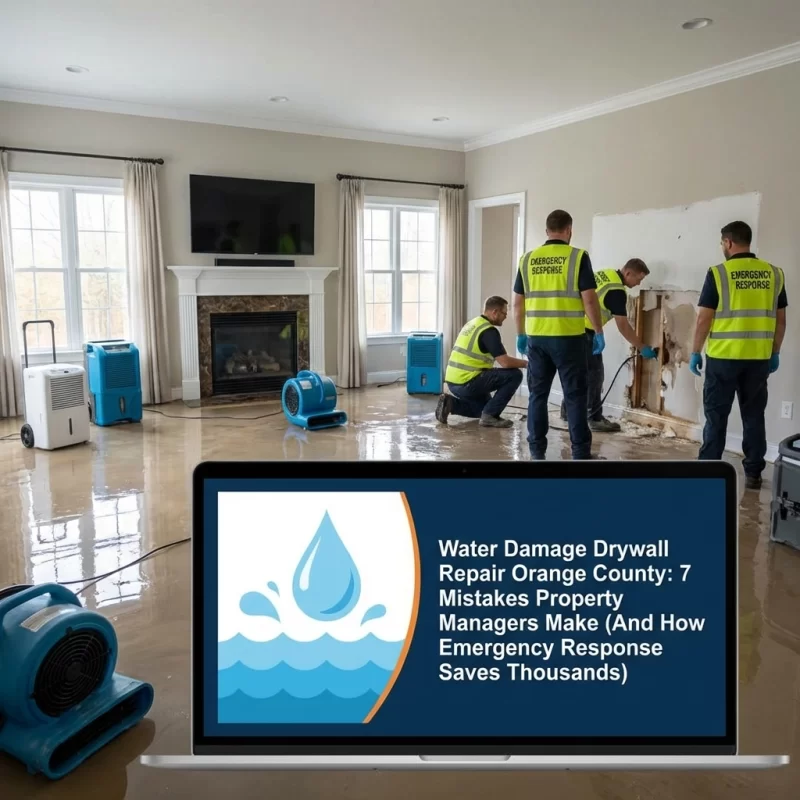
Emergency response teams arrive with specialized equipment including industrial dehumidifiers, air movers, moisture detection instruments, and antimicrobial treatments. This immediate intervention stops water damage progression and creates optimal conditions for successful restoration.
The financial benefits extend beyond immediate repair savings to include reduced insurance premiums, maintained property values, and minimized tenant disruption. Properties with documented professional emergency response protocols often qualify for lower insurance rates and faster claim processing.
Take Action Now: Your Next Steps
Understanding these seven critical mistakes positions you to make informed decisions when water damage occurs in your Orange County properties. The key is establishing relationships with professional drywall repair services before emergencies arise, creating response protocols that prioritize immediate action.
Remember that in water damage situations, every hour counts. The difference between a manageable repair and a reconstruction project often comes down to the speed and quality of your initial response. By avoiding these common mistakes and implementing professional emergency response strategies, you’ll protect both your properties and your profitability while maintaining positive tenant relationships.
For immediate water damage drywall repair services in Orange County, contact The Drywall Patch Guys at https://drywallpatchguys.com. Our emergency response team is equipped to handle any situation, providing the professional expertise you need to minimize costs and restore your properties quickly.