Uncategorized
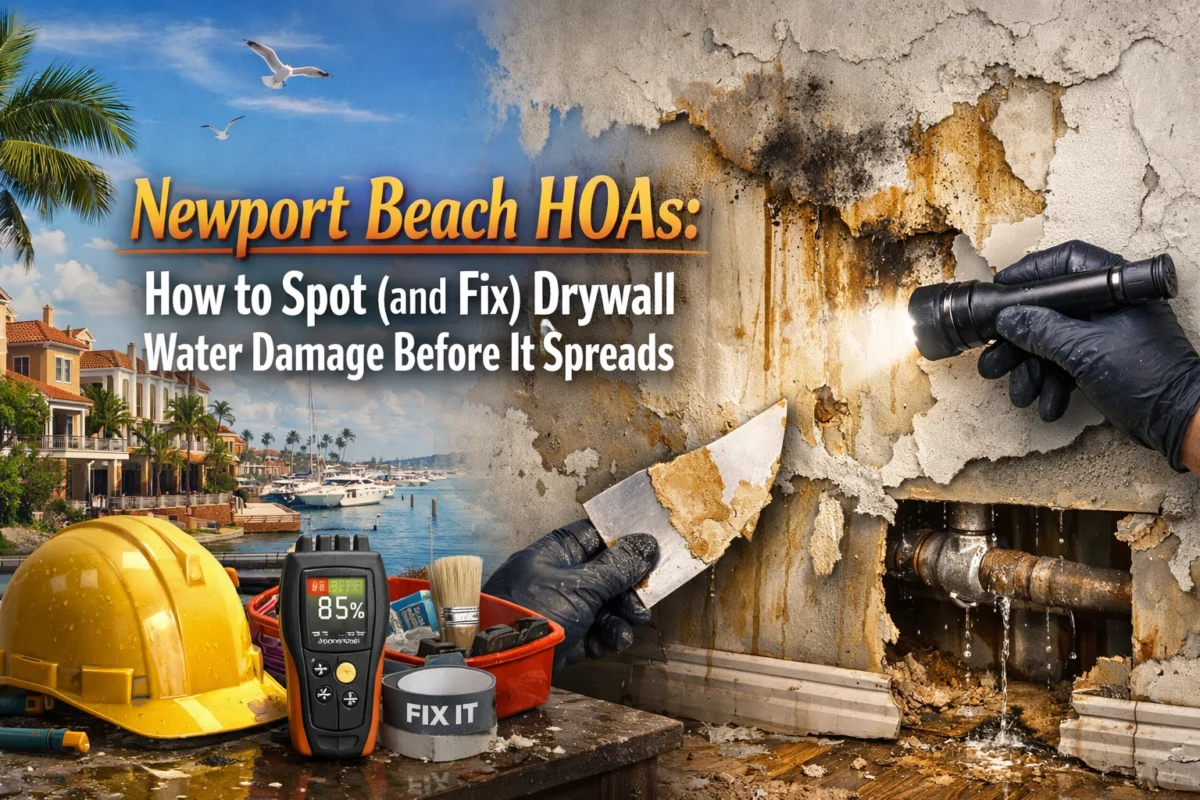
Newport Beach HOAs: How to Spot (and Fix) Drywall Water Damage Before It Spreads
Mar
Managing a Newport Beach HOA comes with unique challenges: and water damage tops the list. Whether it’s from coastal moisture, aging plumbing, or unexpected storms, drywall water damage can spread rapidly through your properties. The good news? When you know what to look for and act quickly, you can save your community thousands of dollars in repairs and protect property values.
In this guide, we’ll walk you through everything you need to spot water damage early and understand the professional repair process. By the end, you’ll be equipped with the knowledge to implement effective monitoring systems and respond decisively when issues arise.
I. Why Early Detection Is Critical for Newport Beach HOAs
Water damage doesn’t wait. Significant damage can develop within just 1 to 2 days after initial water intrusion, and the deterioration continues for weeks if left unaddressed. For HOA boards managing multiple units or common areas, this timeline means that delays in detection translate directly to exponentially higher repair costs.
Newport Beach properties face specific vulnerabilities. The coastal climate brings higher humidity levels, salt air accelerates material deterioration, and seasonal storms test your buildings’ weatherproofing. When water penetrates drywall in these conditions, it creates the perfect environment for mold growth and structural compromise.
The financial impact goes beyond repair costs. Undetected water damage leads to mold contamination, reduced property values, potential liability issues, and emergency assessments that strain homeowner budgets. Early detection allows you to address problems when they’re manageable: before they become community-wide crises.
II. How to Spot Water Damage: Key Warning Signs
Successful water damage detection requires knowing exactly what you’re looking for. Train your property managers, maintenance staff, and board members to recognize these telltale indicators:
Discoloration and Staining
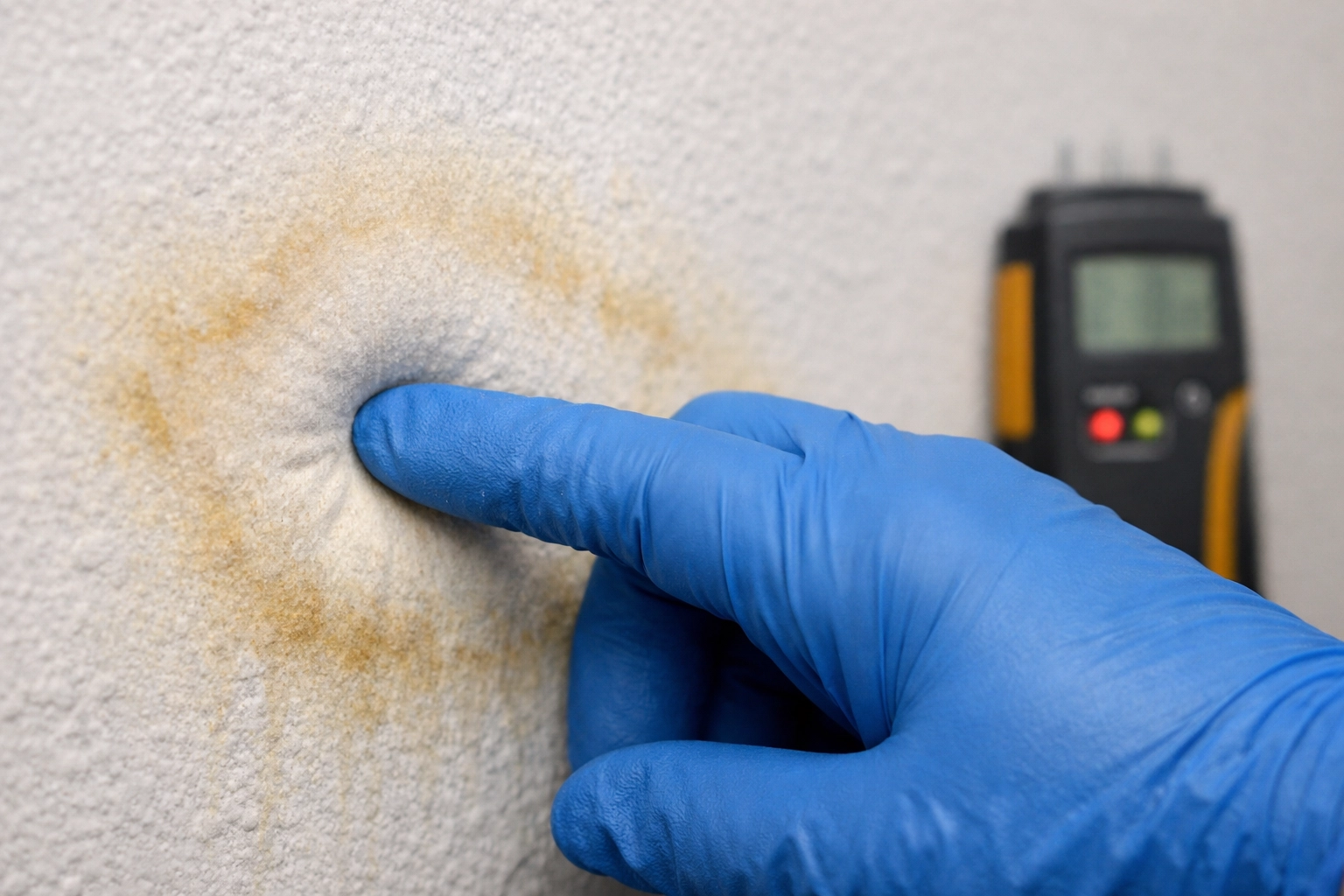
Water marks appear as brown, yellow, or dark patches on walls and ceilings. These stains often have irregular edges and may expand over time. On white or light-colored drywall, even slight discoloration signals moisture intrusion. Don’t dismiss small stains: they indicate water has already penetrated the surface layer.
Soft Spots and Deterioration
Press gently on suspect areas with your fingertips. Healthy drywall feels firm and solid. Water-damaged drywall feels soft, spongy, or gives slightly under pressure. This deterioration means the gypsum core has absorbed moisture and lost its structural integrity.
Texture and Surface Changes
Look for bubbling paint or wallpaper, peeling finishes that lift away from the wall, warped or bulging drywall surfaces, and cracking or crumbling material. These surface changes indicate water has compromised the bond between finish layers and the drywall substrate.
Mold and Mildew Growth
Visible mold appears as black, green, or brown spots or fuzzy patches on surfaces. However, mold often grows inside walls before becoming visible. Pay attention to musty or earthy odors: they’re strong indicators of hidden moisture and mold growth within wall cavities.
Secondary Indicators
Watch for baseboards separating from walls, increased humidity or condensation in specific rooms, rust or corrosion on metal fixtures, and unexplained increases in water bills. These secondary signs often point to ongoing leaks that haven’t yet created visible wall damage.
III. Common Problem Areas in Newport Beach Properties
Focus your inspection efforts on these high-risk locations where water damage most frequently develops:
Roofing and Upper Levels
After storms or during spring when roof damage is most common, inspect attics and top-floor ceilings carefully. Check for water stains around skylights, roof penetrations, and eaves. Coastal winds can drive rain under roofing materials, creating slow leaks that go unnoticed for months.
Plumbing Corridors
Water heater closets, areas behind toilets and under sinks, walls adjacent to showers and bathtubs, and laundry room walls all deserve special attention. In multi-unit buildings, stack these inspections vertically: a leak on the third floor often causes damage on lower levels.
Foundations and Ground Level
Basement walls and floors, areas where exterior grade slopes toward the building, walls adjacent to irrigation systems, and crawl spaces beneath buildings are vulnerable entry points. Newport Beach’s proximity to the ocean means groundwater issues require particular vigilance.
Common Areas
Pool equipment rooms, clubhouse kitchens and bathrooms, fitness center shower facilities, and exterior walls of covered parking structures often receive less frequent inspection despite their high exposure to moisture.
IV. The Professional Water Damage Fix Process
When you discover water damage, professional remediation follows a systematic approach that ensures complete restoration and prevents future problems. Here’s what happens when you call experts like The Drywall Patch Guys:
Step 1: Immediate Assessment
Professionals use advanced moisture mapping devices and thermal imaging cameras to identify the full extent of hidden moisture. This technology reveals water intrusion that isn’t visible to the naked eye, ensuring no pockets of moisture get left behind to cause future problems.
Step 2: Water Extraction and Drying
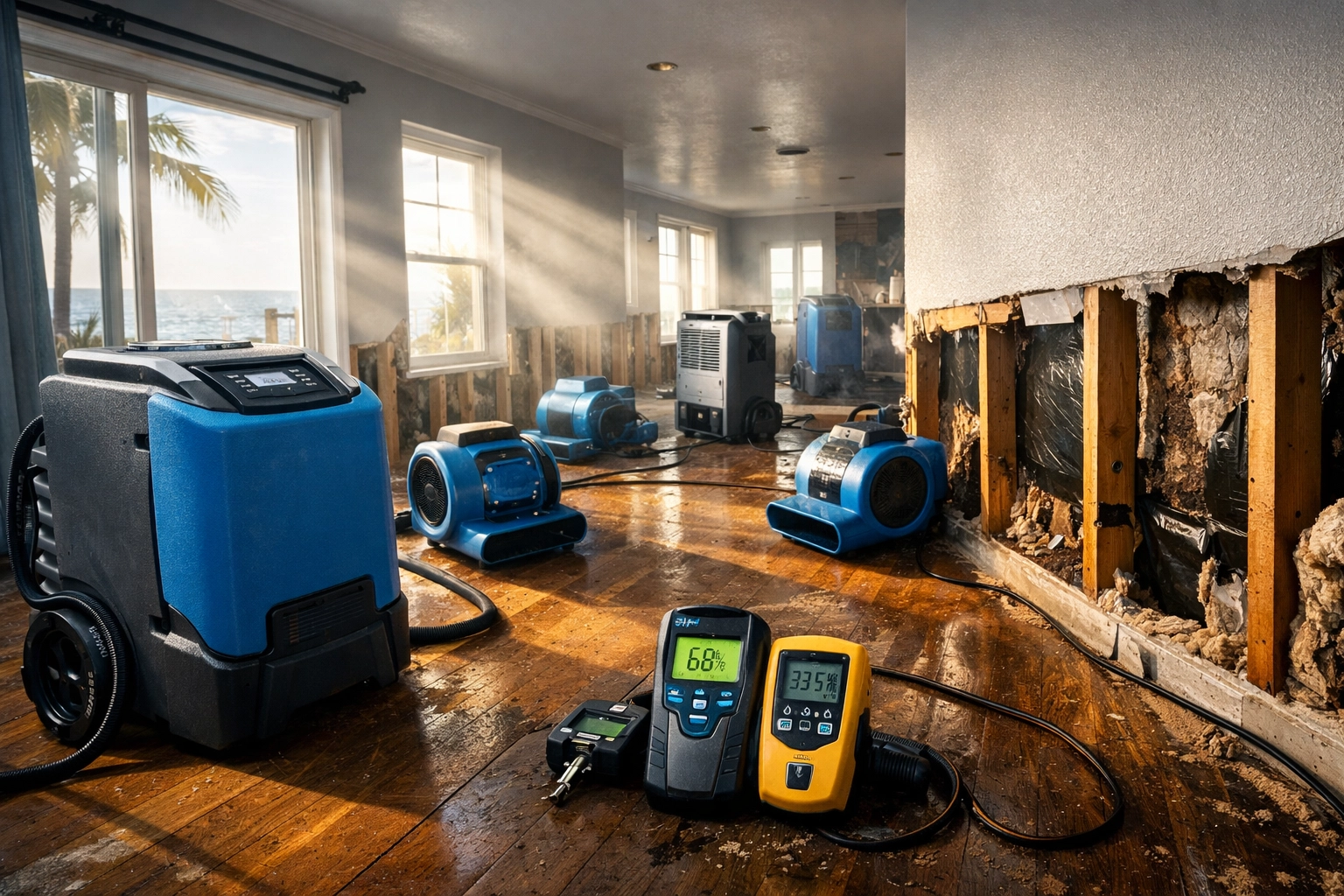
Standing water must be removed immediately, and affected areas dried to industry standards. This process uses commercial-grade dehumidifiers, air movers, and specialized equipment. Proper drying takes several days and requires monitoring to verify moisture levels have returned to normal. Rushing this step guarantees future mold growth and material failure.
Step 3: Damaged Material Removal
Professionals remove compromised drywall, insulation, carpeting, and other affected materials. This step is crucial: leaving damaged materials in place allows dry rot to spread and causes exponentially greater damage. Clean removal also prevents cross-contamination of unaffected areas.
Step 4: Mold Remediation
After water removal, mold abatement includes treating affected areas with appropriate solutions, air scrubbing to remove airborne spores, and decontamination measures. Professional remediation companies use non-toxic mildicides that are safe for occupied buildings while effectively preventing future growth.
Step 5: Repairs and Restoration
Once areas are verified completely dry, new drywall and finishes are installed to match existing textures and colors. Professional restoration ensures repairs blend seamlessly with surrounding areas: you won’t be able to tell work was done.
V. Prevention and Monitoring for HOA Boards
The most cost-effective approach to water damage is preventing it from occurring. Implement these proactive measures:
Regular Inspection Schedule
Conduct quarterly walk-throughs of common areas and annual inspections of individual units (with proper notice). Schedule post-storm inspections within 48 hours of significant weather events. Document findings with photos and maintain inspection logs to track changes over time.
Maintenance Programs
Clean gutters and downspouts seasonally, test and maintain roof flashing and waterproofing, inspect and service plumbing systems annually, and maintain proper grading around buildings. These preventive measures cost far less than emergency repairs.
Education and Communication
Provide homeowners with water damage recognition guides, establish clear reporting procedures for suspected leaks, and include water damage prevention tips in regular HOA communications. When residents know what to look for, they become your first line of defense.
Emergency Response Plan
Maintain relationships with 24/7 emergency water damage services, keep updated contact lists for board members and property managers, and establish clear authorization procedures for emergency repairs. When water damage occurs, every hour counts: having systems in place prevents costly delays.
VI. Frequently Asked Questions
How quickly do we need to respond to water damage?
Water damage requires immediate attention: within 24 to 48 hours maximum. The longer water sits, the more extensive the damage and the higher the mold risk. Most professional restoration companies offer 24/7 emergency response for this reason.
Can we handle small water stains ourselves?
Small surface stains might seem manageable, but they often indicate larger hidden problems. Professional assessment with moisture detection equipment is essential to determine the true extent of damage. What looks like a small ceiling stain could involve extensive water damage in the attic above.
Will insurance cover water damage repairs?
Coverage depends on the source and circumstances of the damage. Sudden events like burst pipes typically receive coverage, while gradual damage from deferred maintenance may not. Many restoration companies offer direct insurance billing to streamline the claims process.
How can we tell if mold is present?
Visible mold growth and musty odors are obvious indicators, but mold often grows inside walls before becoming visible. Professional mold testing provides definitive answers and guides appropriate remediation efforts.
What’s the typical timeline for complete restoration?
Simple repairs may take a few days, while extensive damage requiring drying, mold remediation, and reconstruction can take several weeks. The critical factor is allowing adequate drying time: rushing this process guarantees future problems.
Taking Action to Protect Your Community
Water damage doesn’t have to become a financial crisis for your Newport Beach HOA. With regular monitoring, prompt response to warning signs, and professional drywall repair services, you can protect your community’s properties and maintain property values.
Remember that early detection is your most powerful tool. Train your team to recognize warning signs, implement regular inspection schedules, and don’t hesitate to call professionals when you spot potential problems. The investment in preventive monitoring and quick response pays dividends in avoided major repairs and maintained community satisfaction.
Your board has the knowledge now to spot problems early and take decisive action. When water damage does occur, The Drywall Patch Guys provides the professional assessment and restoration services Newport Beach HOAs need to resolve issues completely and permanently.