
Uncategorized
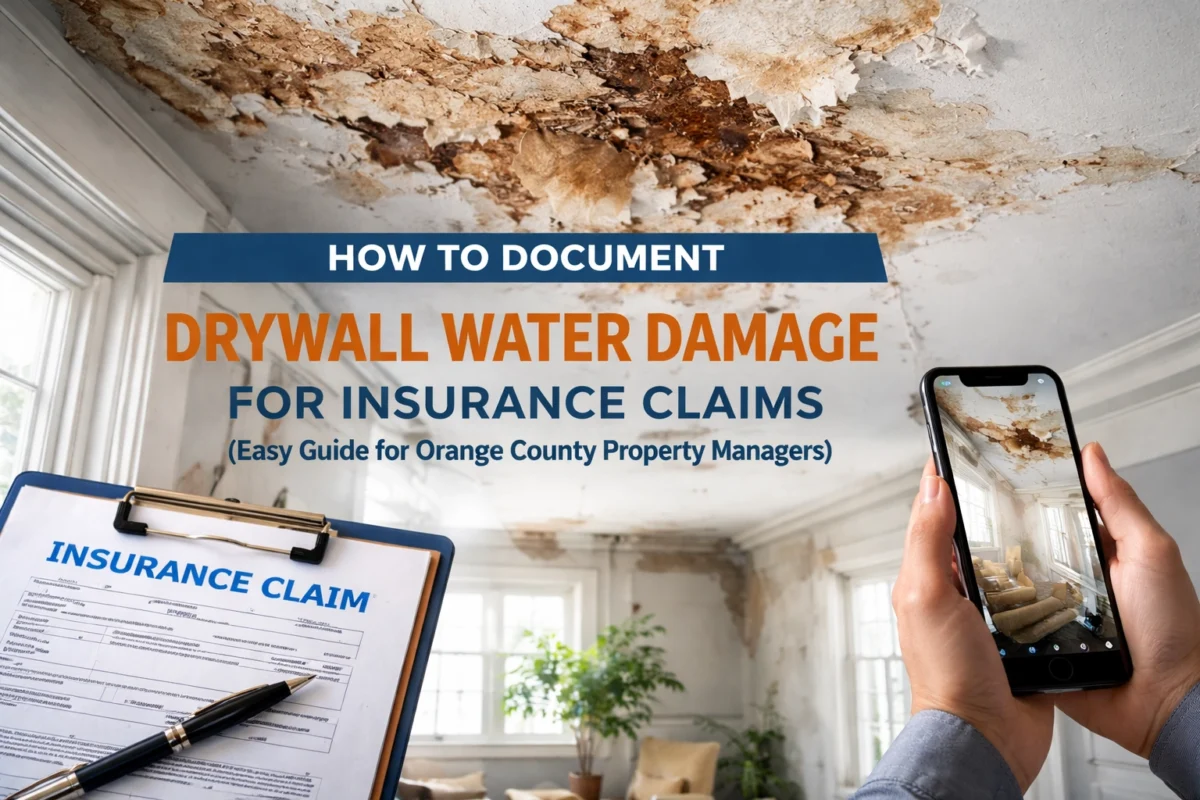
How to Document Drywall Water Damage for Insurance Claims (Easy Guide for Orange County Property Managers)
Feb
Water damage to drywall is one of the most common, and most frustrating, issues Orange County property managers face. Whether it’s a burst pipe in an Irvine apartment complex or a roof leak in a Newport Beach rental, the damage can escalate quickly. But here’s the thing: how you document that damage can make or break your insurance claim.
In this comprehensive guide, you’ll learn exactly how to document drywall water damage step by step. By the end, you’ll be equipped with the knowledge to file a strong claim, avoid common pitfalls, and get your properties back in shape faster. Let’s walk through the process together.
I. Why Proper Documentation Matters for Insurance Claims
Before we dive into the how-to, it’s essential to understand why documentation is so crucial. Insurance adjusters weren’t there when the water came pouring in. They rely entirely on the evidence you provide to determine whether your claim gets approved, and for how much.
Poor documentation leads to:
- Denied or underpaid claims
- Lengthy back-and-forth with adjusters
- Out-of-pocket repair costs
- Delays in getting tenants back into their units
Strong documentation leads to:
- Faster claim approvals
- Fair compensation for repairs
- Clear communication with your insurance company
- A solid paper trail if disputes arise
As a property manager overseeing multiple units across Orange County, you can’t afford to leave money on the table. Proper documentation protects your investment and your bottom line.
II. First Steps: What to Do Immediately After Discovering Water Damage
When you discover water damage to drywall, time is critical. Here’s your immediate action plan:
Step 1: Contact Your Insurance Company Right Away
Don’t wait. Call your insurance provider within 24 hours of discovering the damage. Most policies require prompt notification, and delays can complicate your claim. Get your claim number and adjuster contact information during this first call.
Step 2: Stop the Water Source (If Safe)
If you can safely stop the leak, turn off a valve, cover a roof breach, do it. This prevents further damage and shows your insurer you took reasonable steps to mitigate the situation.
Step 3: Don’t Clean Up Yet
This is important: do not start cleanup or repairs before documenting everything. Your photos and videos need to capture the damage in its original state. Once you start removing wet drywall or running dehumidifiers, you lose critical evidence.
III. How to Photograph Drywall Water Damage Like a Pro
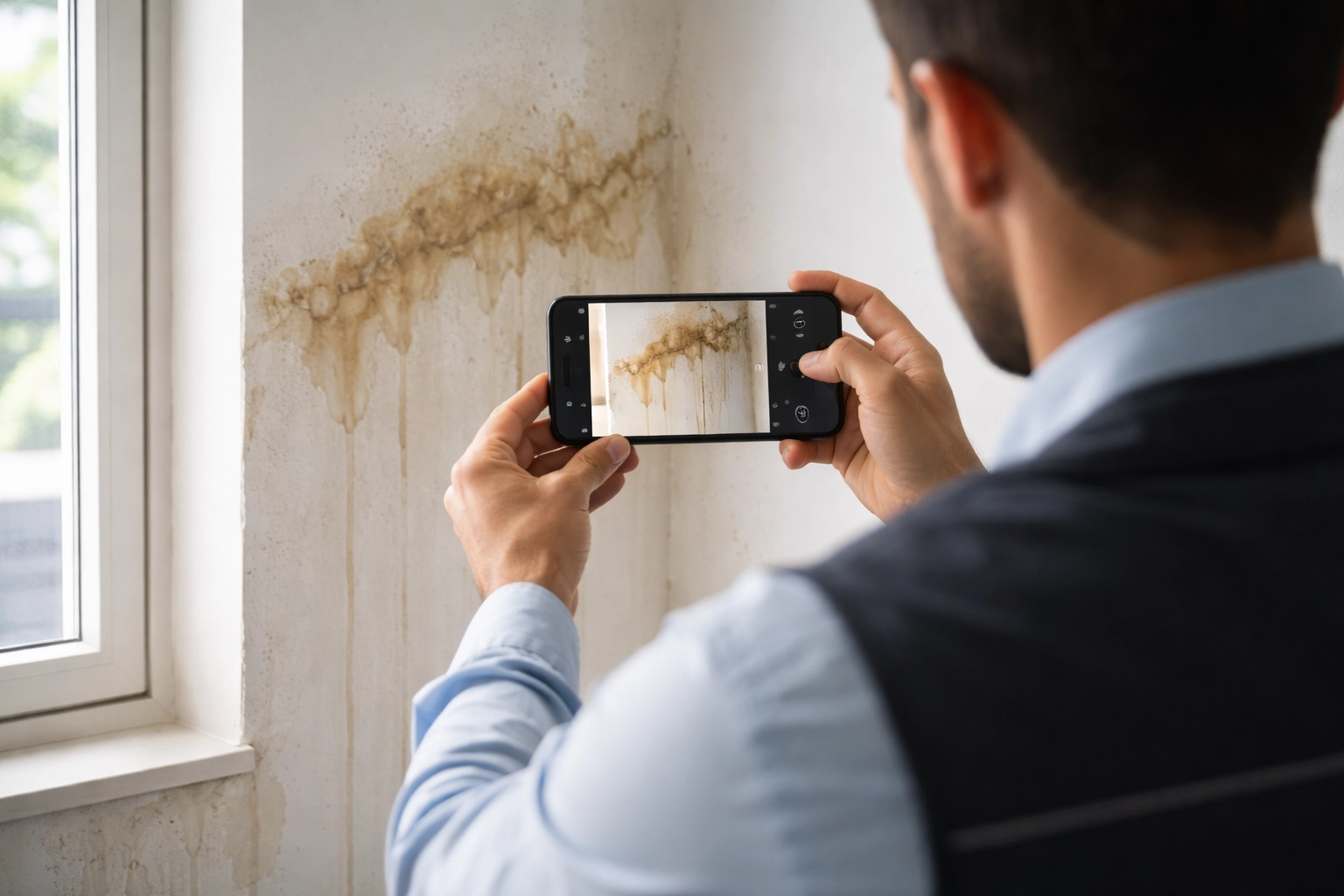
Photos are the backbone of your insurance claim. Here’s how to capture them effectively:
Take Wide-Angle Shots First
Start by photographing the entire affected room or area. These establishing shots show adjusters the overall scope of damage and help them understand the layout.
Capture Close-Up Details
Next, move in for detailed close-ups of the damaged drywall. Focus on:
- Water stains and discoloration
- Bubbling or peeling paint
- Warped or sagging drywall
- Visible mold growth
- Crumbling or soft spots
Document the Water Source
If the source of the leak is visible, a burst pipe behind a wall, a stained ceiling tile, photograph it. This helps establish causation, which adjusters need to process your claim.
Photograph Water Lines
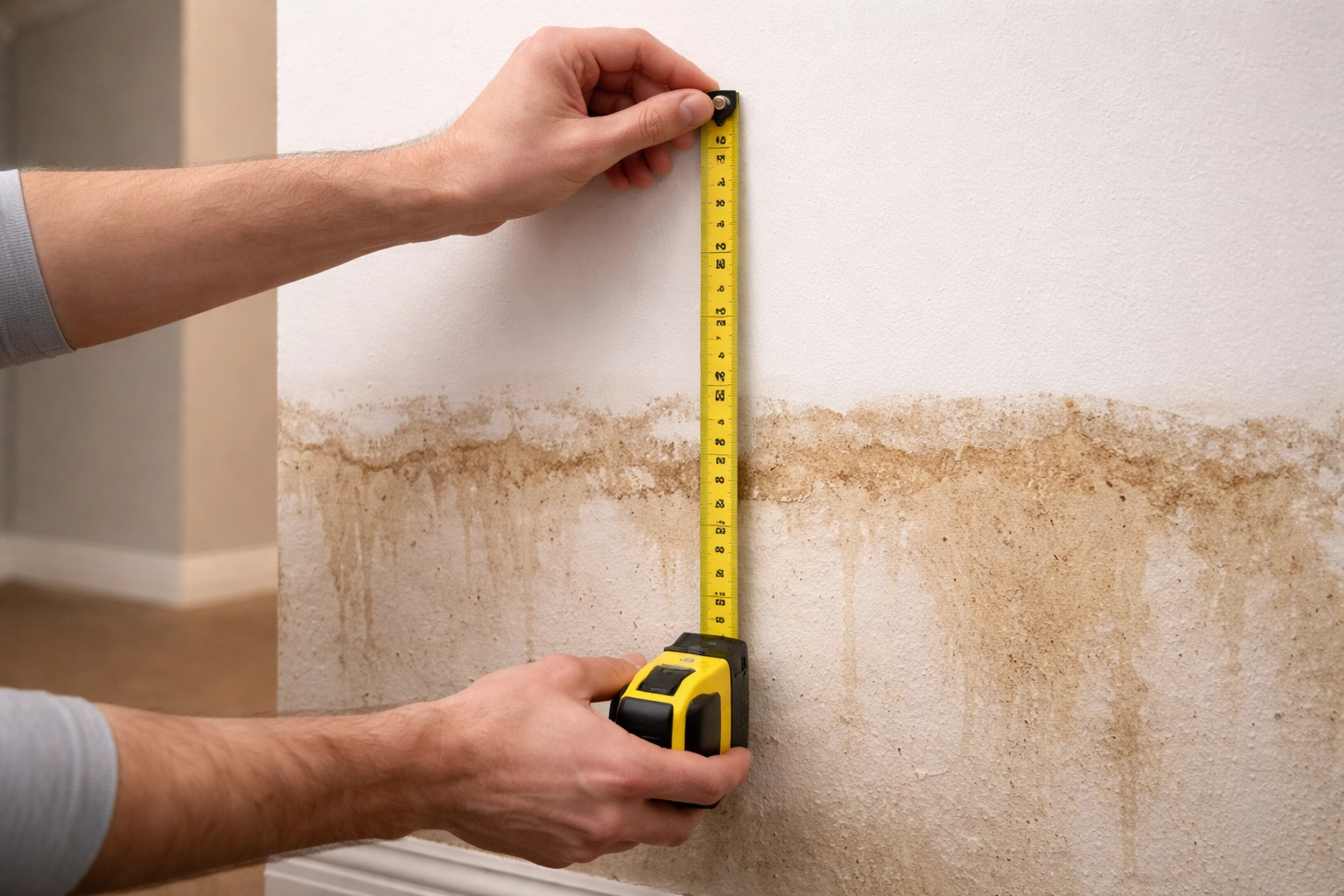
Water lines on walls are incredibly valuable evidence. They clearly show how high the water reached and how much drywall was saturated. Capture these from multiple angles.
Include Reference Objects for Scale
Place a ruler, tape measure, or even a common object like a pen next to damaged areas. This gives adjusters a clear sense of the damage size without guessing.
Pro tip: Make sure your phone or camera has the correct date and time settings. Timestamps prove the damage occurred within your policy’s covered timeframe.
IV. Recording Video Evidence for Maximum Impact
While photos are essential, video evidence takes your documentation to the next level. Here’s how to do it right:
Walk Through Slowly
Move through the affected areas at a slow, steady pace. Quick, shaky footage is hard to review and looks unprofessional.
Narrate What You See
As you record, describe the damage out loud. For example:
“This is Unit 4B at our Lake Forest property. Today is January 21st, 2026. You can see water staining on the drywall approximately four feet high. The drywall is soft to the touch and shows signs of warping near the baseboard.”
This narration provides context that photos alone can’t convey.
Record Measurements on Camera
If possible, measure the affected drywall sections while recording. State the dimensions clearly: “This damaged section measures approximately 8 feet wide by 4 feet tall.”
V. Getting Professional Documentation
For significant damage, it’s worth bringing in the pros. Professional restoration companies can provide:
- Moisture meter readings that detect hidden water damage inside walls
- Thermal imaging reports showing moisture patterns
- Detailed written assessments of damage scope and repair needs
These professional reports carry significant weight with insurance adjusters. They validate damage that isn’t visible to the naked eye and demonstrate that you’ve done your due diligence.
At The Drywall Patch Guys, we work with property managers throughout Orange County, from Irvine to Mission Viejo to San Clemente, and we’re happy to provide documentation that supports your insurance claims.
VI. Organizing Your Documentation File
A disorganized claim is a weak claim. Create a dedicated digital folder for each water damage incident containing:
- Claim number and adjuster contact info
- All photos (labeled by location and date)
- Video files
- Measurement notes with precise dimensions
- Professional assessment reports
- Receipts for emergency repairs (tarping, water extraction, dehumidifier rentals)
- Contractor estimates for drywall repair and replacement
For property managers handling multiple units, organize everything by property address and unit number. This makes it easy to reference during calls with your adjuster.

VII. Common Documentation Mistakes to Avoid
Even experienced property managers make these errors. Here’s what to watch out for:
Waiting Too Long to Document
Water damage gets worse, and harder to prove, over time. Document everything within the first 24-48 hours.
Only Taking a Few Photos
More is better. Take dozens of photos from every angle. You can always delete extras later, but you can’t go back in time to capture what you missed.
Forgetting to Document “Before” Conditions
If you have photos of the property before the damage occurred (from move-in inspections or routine maintenance), include them. They help establish the change in condition.
Throwing Away Damaged Materials Too Soon
Keep samples of damaged drywall, insulation, or other materials until your adjuster has reviewed your claim. They may want to inspect them.
VIII. Frequently Asked Questions
Q: How long do I have to file an insurance claim for water damage?
A: Most policies require you to report damage promptly, typically within 24-72 hours. Check your specific policy, but don’t delay.
Q: Will my insurance cover mold that develops from the water damage?
A: It depends on your policy. Many standard policies exclude mold, but some offer limited coverage. Document any mold growth immediately and ask your adjuster.
Q: Should I get repair estimates before the adjuster visits?
A: Yes! Having professional estimates ready shows you’re prepared and gives you a baseline to compare against the adjuster’s assessment.
Q: What if my claim gets denied?
A: Strong documentation gives you grounds to appeal. You can also hire a public adjuster or consult with an attorney if needed.
IX. Moving Forward with Confidence
Dealing with water damage is never fun, but thorough documentation puts you in control. By following the steps in this guide: photographing comprehensively, recording video with narration, getting professional assessments, and staying organized: you’ll build a strong case for your insurance claim.
When you’re ready to repair that damaged drywall, The Drywall Patch Guys are here to help. We serve property managers throughout Orange County, including Newport Beach, Lake Forest, Dana Point, and Laguna Beach. We’ll get your properties looking great again( fast.)