Uncategorized
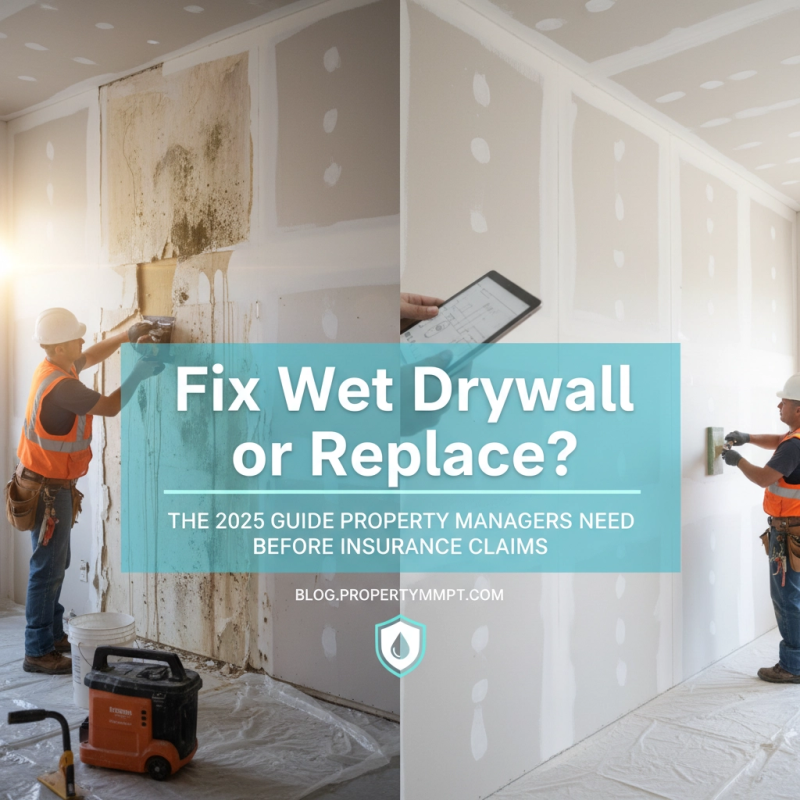
Fix Wet Drywall or Replace? The 2025 Guide Property Managers Need Before Insurance Claims
Dec
When water damage strikes your property, you’ll face a critical decision that can impact both your insurance claim and long-term building integrity: should you fix wet drywall or replace it entirely? This comprehensive guide will equip you with the essential knowledge property managers need to make informed decisions before filing insurance claims in 2025.
Whether wet drywall requires replacement depends primarily on three crucial factors: the type of water contamination, duration of exposure, and extent of structural damage. Not all wet drywall needs complete replacement, but making the wrong choice can lead to costly mold remediation, failed insurance claims, and potential liability issues. By the end of this guide, you’ll understand exactly when to repair versus replace, how to document damage for insurance purposes, and the critical timeline considerations that can save thousands in restoration costs.
I. Comprehensive Assessment Framework: Repair vs. Replace Decision Matrix
In this section, we’ll establish the foundational criteria for evaluating water damaged drywall. The severity assessment determines whether repair or replacement is the most appropriate and cost-effective solution.
Repair is appropriate when you encounter:
- Light surface staining without structural compromise
- Minor discoloration that hasn’t penetrated deep into the material
- No sagging, soft spots, or visible deformation
- Moisture levels that return to normal quickly after source elimination
- Damage confined to small, isolated areas
Replacement becomes necessary when you observe:
- Soft, crumbly, or sagging drywall panels
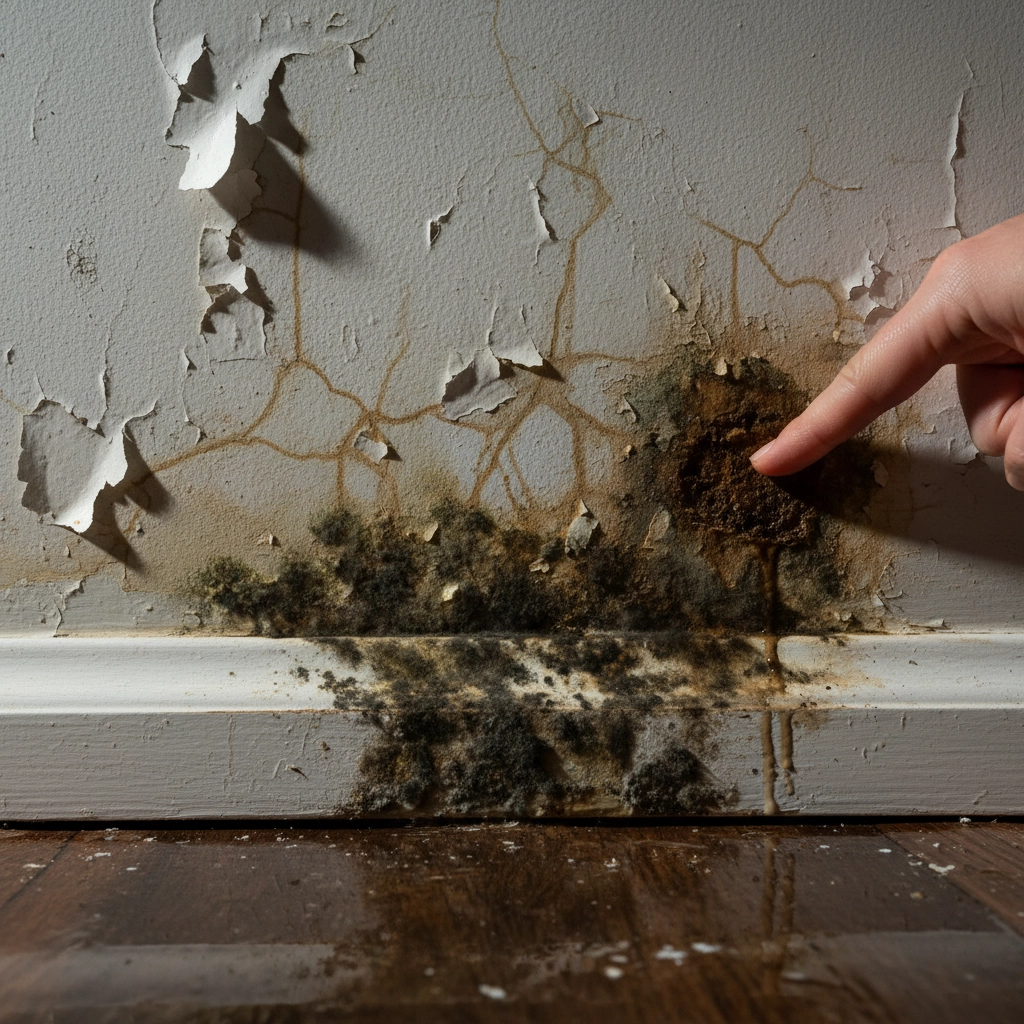
- Widespread visible mold or mildew growth
- Structural sagging exceeding 3/8 inch from original position
- Compromised framing or supporting materials
- Multiple water damage incidents in the same location
The key principle you must remember is that early intervention significantly impacts both repair costs and insurance claim success. Professional restoration companies follow established protocols that prioritize safety and structural integrity over short-term cost savings.
II. Critical Warning Signs That Demand Immediate Replacement
Now it’s time to examine the specific indicators that make replacement non-negotiable. These warning signs represent situations where attempting repairs could create liability issues and compromise building safety.
Visual indicators requiring immediate replacement include:
- Persistent water stains that reappear after initial drying attempts
- Bubbling or peeling paint across significant surface areas
- Warping, swelling, or visible panel deformation
- Musty odors indicating trapped moisture or hidden microbial growth
- Soft or spongy texture when applying gentle pressure
- Dark patches or discoloration along seams, corners, or baseboards
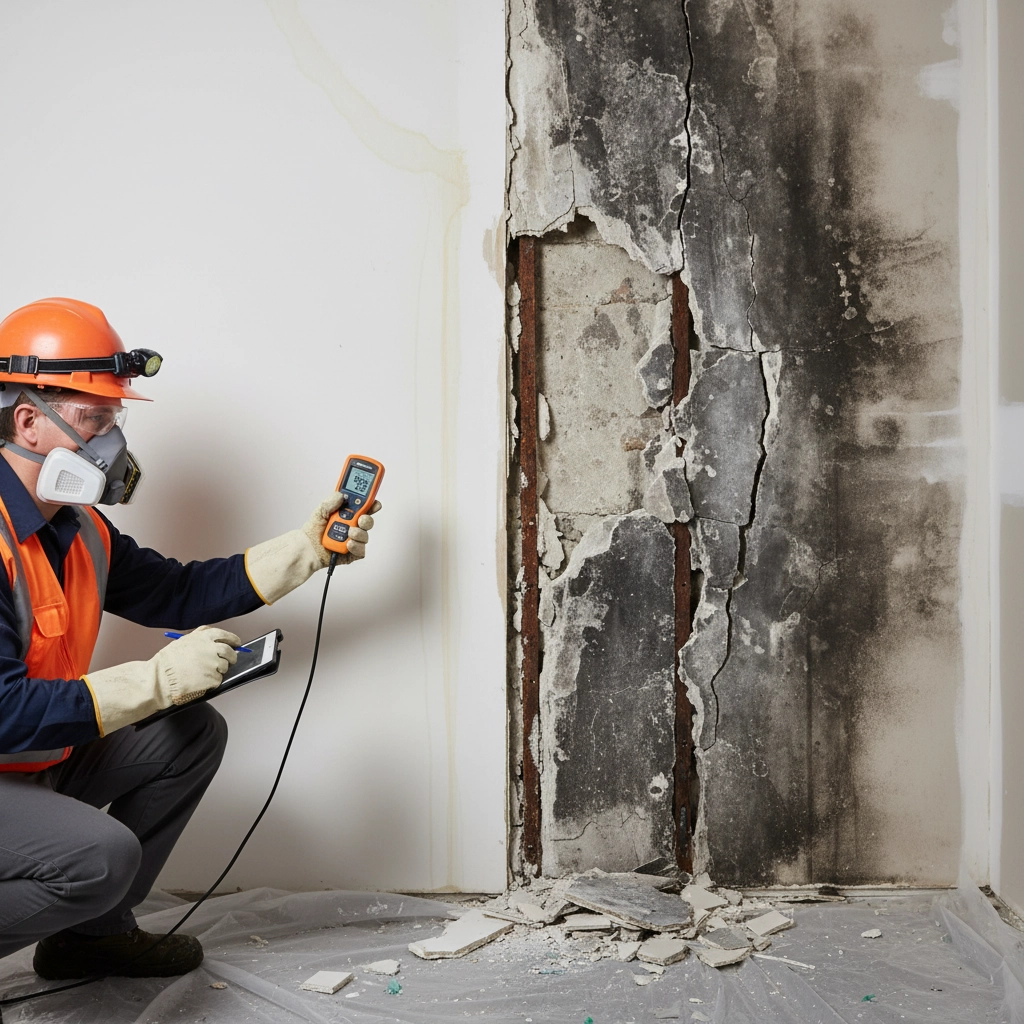
If the drywall feels mushy when gently pressed, replacement is required immediately to prevent structural failure and potential safety hazards. Using professional-grade moisture meters can help you determine severity levels: readings consistently above 20% moisture content typically indicate replacement is the only viable option.
Essential safety consideration: Wet drywall near electrical connections presents serious fire and electrocution risks and must be replaced immediately, regardless of apparent damage severity.
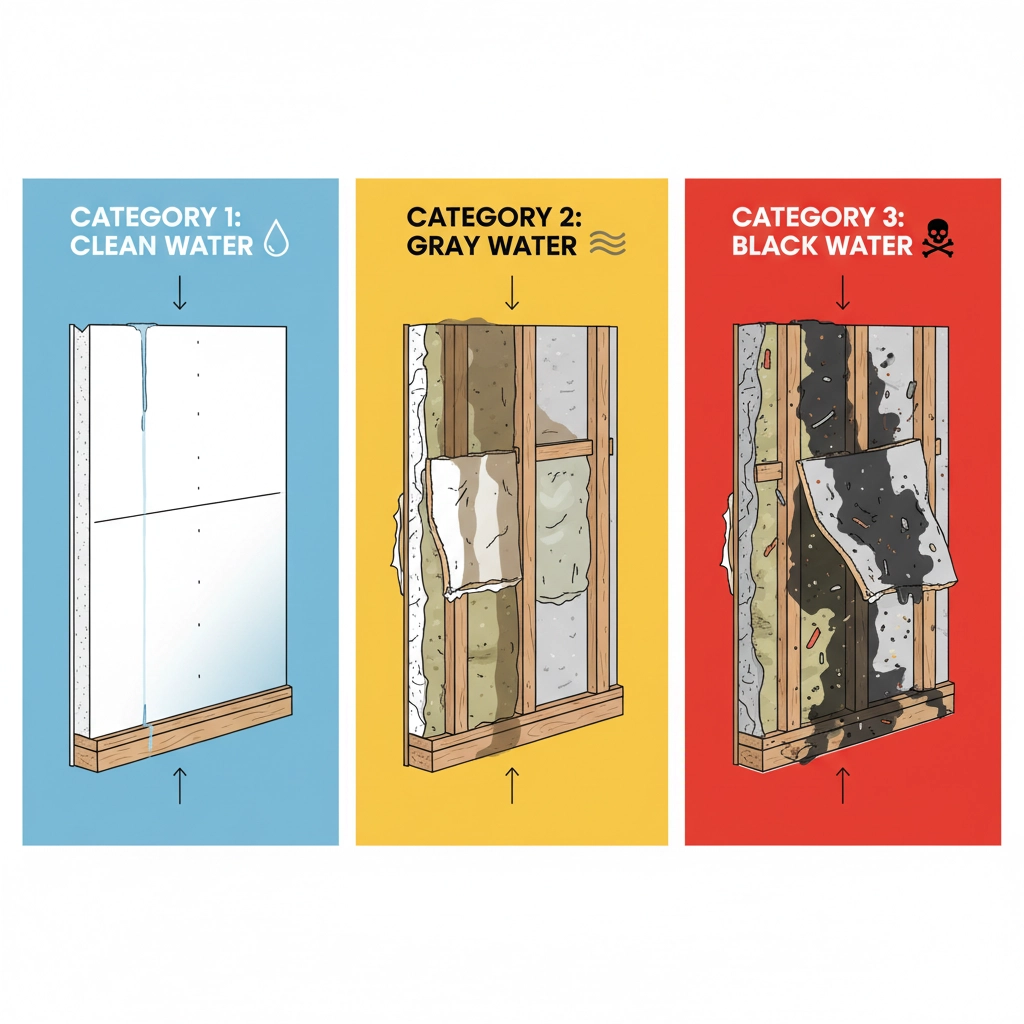
III. Water Type Classification and Contamination Impact
Understanding the source and type of water damage is crucial for making appropriate restoration decisions and ensuring proper insurance claim documentation.
Clean Water Sources (Category 1):
Clean water from burst pipes, roof leaks, or supply line failures may be dried and monitored if addressed within 24 hours. These situations offer the best opportunity for successful repair rather than replacement, provided moisture penetration remains minimal.
Gray Water Sources (Category 2):
Water from appliances, sinks, washing machines, or dishwashers typically requires partial removal through “flood cuts”: removing damaged sections 12-24 inches above the highest visible water line while preserving unaffected areas.
Black Water Sources (Category 3):
Sewage backups, outdoor flooding, or any contaminated water source always requires complete drywall replacement due to serious health hazards and contamination risks. Insurance policies typically have specific requirements for black water remediation.
The contamination level directly impacts both restoration approach and insurance coverage, making accurate identification essential for successful claims processing.
IV. Professional Damage Assessment Criteria
Professional drywall contractors use standardized assessment protocols to determine the most appropriate restoration approach. Understanding these criteria helps property managers make informed decisions and communicate effectively with insurance adjusters.
Professional assessment includes moisture mapping, structural evaluation, and air quality testing when necessary. These comprehensive evaluations provide the documentation required for insurance claims while ensuring appropriate restoration methods.
Important consideration: Obtain multiple professional assessments before making final repair versus replacement decisions, especially for extensive damage that could impact insurance claim settlements.
V. Insurance Claims Strategy and Coverage Implications
Before making any restoration decisions, you must understand how repair versus replacement choices impact insurance coverage and claim processing. Most property insurance policies cover sudden, accidental damage but exclude gradual deterioration or flooding.
Pre-claim essential steps include:
- Document the water source and determine if damage qualifies as covered peril
- Review policy coverage limits and deductible requirements
- Report claims promptly to prevent coverage disputes
- Photograph all damage from multiple angles with timestamp documentation
- Initiate emergency mitigation within 24-48 hours to prevent additional damage
For rental properties, landlords bear legal responsibility for repairing structural components including drywall, walls, and ceilings affected by covered water damage events. Property insurance covering structural components helps offset restoration costs for qualifying incidents.
Insurance adjusters create detailed estimates listing labor and materials costs, determining settlement on either actual cash value (ACV) or replacement cost basis. Understanding these valuation methods helps property managers prepare appropriate documentation and contractor estimates.
VI. Professional Restoration Process and Industry Standards
When replacement becomes necessary, professional restoration follows established EPA and IICRC standards to ensure proper remediation and prevent future problems.
The systematic restoration process includes:
Containment and Safety Protocol: Professional crews establish containment barriers to prevent dust and potential mold spore distribution throughout unaffected areas.
Selective Removal: Damaged drywall, insulation, and contaminated materials are safely removed using flood cut techniques, typically extending 12-24 inches above visible damage to eliminate all saturated materials.
Structural Drying: Industrial dehumidifiers, air movers, and controlled airflow systems ensure complete moisture elimination from framing and supporting structures.
Material Replacement: Moisture-resistant drywall installation in appropriate areas, with proper vapor barriers and insulation replacement where necessary.
Finishing and Restoration: Professional taping, texturing, priming, and painting restore walls to pre-damage condition.
Final Verification: Moisture readings and air quality testing confirm safe completion before project closure.
This comprehensive approach protects property value, ensures occupant health, and satisfies insurance requirements for proper restoration.
VII. Cost Analysis and Long-Term Financial Impact
Understanding the financial implications of repair versus replacement decisions helps property managers make cost-effective choices that protect long-term property value.
Typical repair costs for minor damage: $300-$850 per affected area
Replacement costs: $1.50-$3.50 per square foot for materials and labor
However, choosing inadequate repairs to minimize immediate costs often results in exponentially higher expenses when hidden mold develops or structural damage spreads. Professional water damage restoration may seem expensive initially, but prevents costly remediation projects and potential liability issues.
Hidden costs of inadequate repairs include:
- Mold remediation averaging $3,000-$10,000 per incident
- Structural damage requiring extensive reconstruction
- Potential tenant displacement and lost rental income
- Legal liability for health-related issues
Smart property managers invest in proper restoration to protect both immediate and long-term financial interests.
VIII. Critical Timeline and Prevention Strategies
Property managers must address water-damaged drywall within 24-48 hours to prevent mold growth and minimize restoration costs. Before any drying begins, eliminate the underlying water source through leak repairs or moisture control improvements.
Immediate action steps:
- Stop the water source and document the cause
- Remove standing water and begin drying process
- Contact professional restoration services for assessment
- Document all damage with photographs and written descriptions
- Notify insurance carrier and begin claims process
Prevention strategies for future protection:
- Implement regular property inspection schedules
- Install water monitoring systems in vulnerable areas
- Upgrade aging plumbing and roofing components
- Address drainage and ventilation issues proactively
- Maintain emergency response protocols and contractor relationships
By following these comprehensive guidelines, property managers can make informed decisions about fixing wet drywall versus replacement, ensure successful insurance claim processing, and protect both property value and tenant safety. Remember that professional assessment and prompt action remain the most important factors in achieving positive outcomes for water damage incidents.