Skip to content
No products in the cart.
Uncategorized
DIY Drywall Patch vs Professional Service: Which Is Better for Your Property?

16
Dec
Dec
When you discover drywall damage in your property, you’re immediately faced with a critical decision: tackle the repair yourself or call in the professionals. This comprehensive guide will walk you through everything you need to know about DIY drywall patch vs professional service to make the right choice for your specific situation.
By the end of this article, you’ll gain valuable insights into the costs, benefits, and limitations of both approaches. You’ll be equipped with the knowledge to assess your damage properly and choose the most cost-effective solution that delivers the results you need.
I. Understanding the Scope of Drywall Damage
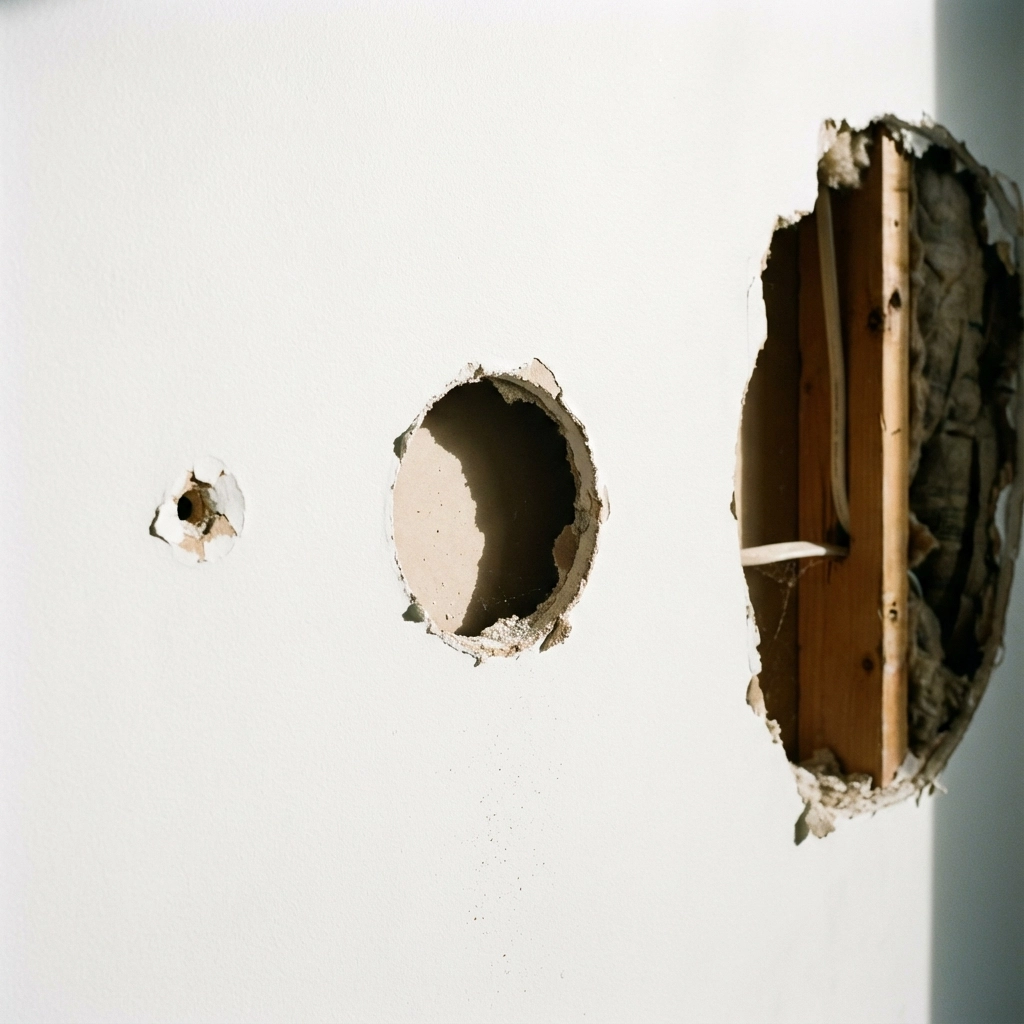
Before diving into repair options, it’s essential to properly assess the extent and type of damage you’re dealing with. Drywall repairs fall into several distinct categories, each requiring different levels of skill and equipment.
Minor cosmetic damage includes nail holes, small screw holes, and hairline cracks under 2 inches. These superficial issues typically don’t affect the structural integrity of your wall and represent the most straightforward repair scenarios.
Moderate damage encompasses holes between 2-6 inches, deeper gouges, and minor water stains. This category requires more advanced techniques and materials but remains within the realm of ambitious DIY projects.
Major damage involves holes larger than 6 inches, extensive water damage, ceiling repairs, and damage affecting textured surfaces. These repairs often require professional-grade tools and expertise to achieve seamless results.
II. The DIY Approach: Benefits and Limitations
Core Advantages of DIY Repairs
Cost savings represent the most compelling reason homeowners choose the DIY route. Basic repair materials: joint compound, putty knives, sandpaper, and primer: typically cost under $50 for small projects. You’ll avoid labor charges that can range from $150-400 for professional services.
Personal satisfaction shouldn’t be underestimated. Successfully completing your own drywall patch provides valuable learning opportunities and a genuine sense of accomplishment. You’ll develop skills that serve you well for future maintenance needs.
Flexible scheduling gives you complete control over project timing. You won’t need to wait for contractor availability or work around someone else’s schedule. This flexibility proves especially valuable for non-urgent repairs.
Significant DIY Limitations
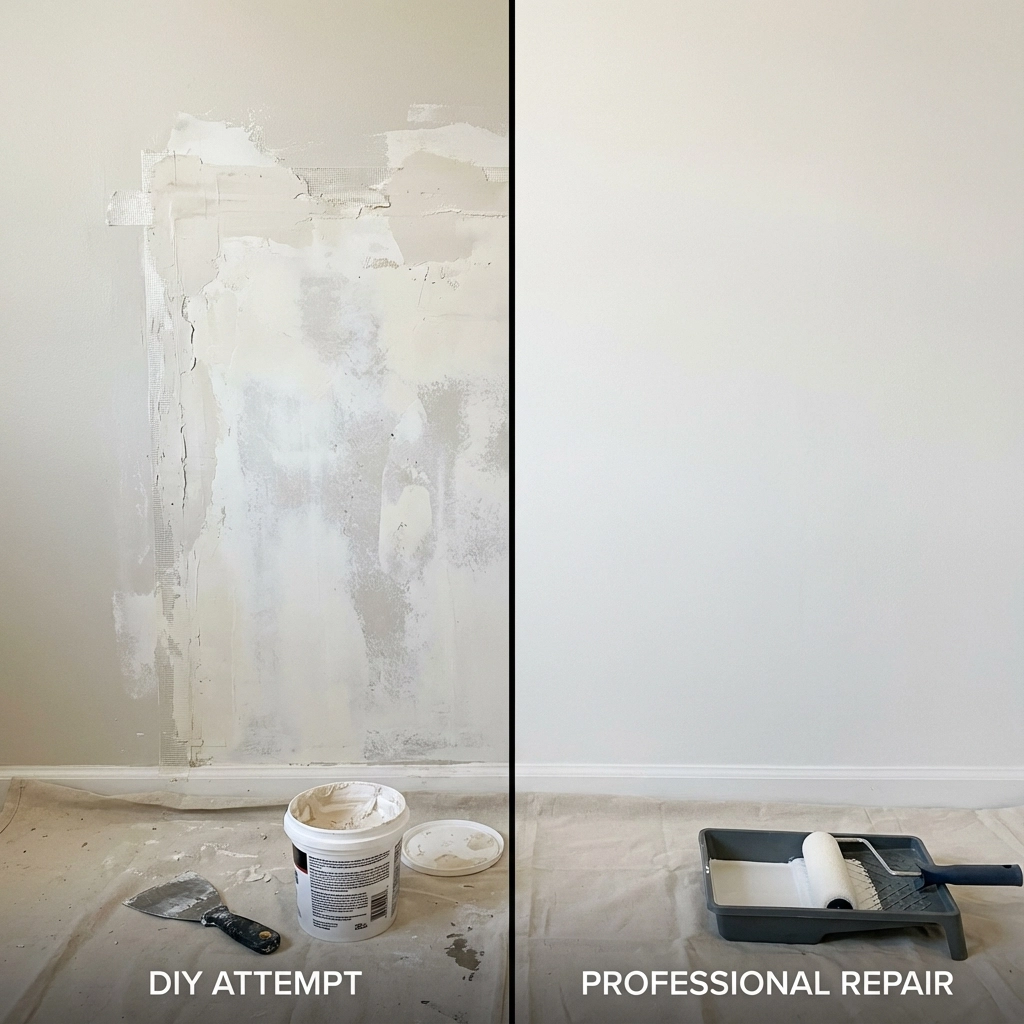
Skill requirements present the biggest obstacle for DIY success. Poor technique leads to visible patch lines, uneven textures, and repairs that show through fresh paint. Achieving a seamless drywall repair requires steady hands, proper tool usage, and understanding of drying times.
Time investment often exceeds expectations. Without professional equipment and experience, repairs that take professionals 2-3 hours can stretch into full weekend projects. Multiple coats of compound, proper drying time, and careful sanding all contribute to extended timelines.
Tool limitations create additional challenges. Professional sanders, texture guns, and specialized cutting tools aren’t cost-effective for one-time projects. Working with basic tools often compromises the quality of your final results.
III. Professional Drywall Services: What You’re Really Paying For
Professional Advantages
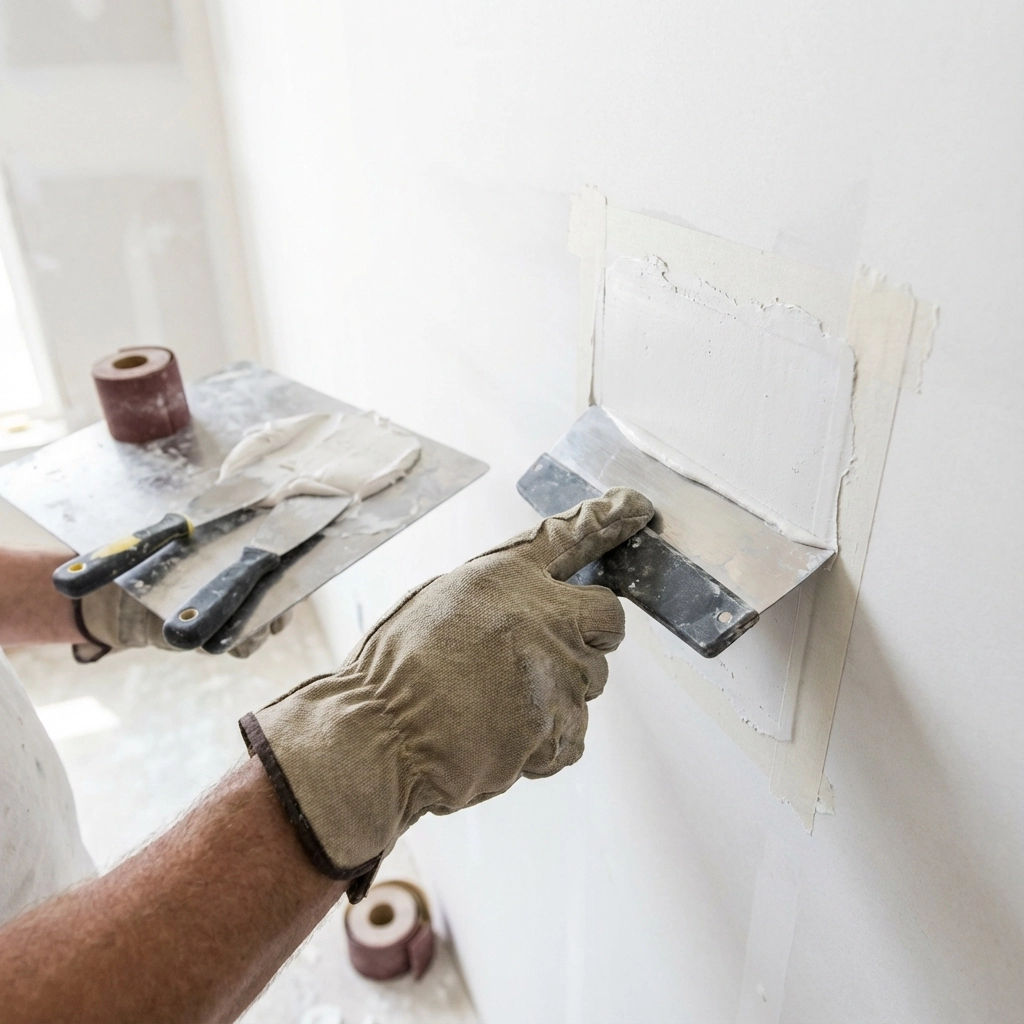
Expertise and precision form the foundation of professional drywall repair services. Trained technicians understand proper mixing ratios, application techniques, and curing processes that ensure long-lasting results. They can seamlessly match existing textures and paint finishes.
Advanced equipment makes a dramatic difference in final quality. Professional sanders create perfectly smooth surfaces without gouges or swirl marks. Spray texture equipment matches existing wall patterns precisely. These tools aren’t available to typical homeowners.
Problem identification represents hidden value in professional services. Experienced contractors spot underlying issues like moisture problems, insulation damage, or electrical hazards that DIYers often miss. Addressing these problems early prevents costly future complications.
Speed and efficiency minimize disruption to your daily life. Professional teams complete most repairs in a single day, including primer application. You won’t deal with weeks of ongoing construction mess in your living space.
Professional Service Considerations
Higher upfront costs represent the primary drawback of professional services. Labor charges typically range from $150-400 for standard repairs, with complex projects costing significantly more.
Scheduling constraints require working around contractor availability. Popular contractors may have waiting lists, especially during busy seasons or after major storms cause widespread damage.
IV. Cost Analysis: True Expense Comparison
DIY Cost Breakdown
For minor repairs, your material costs remain minimal:
- Joint compound: $15-25
- Sandpaper and tools: $20-30
- Primer and paint: $25-40
- Total: $60-95
However, factor in your time investment. At 8-12 hours for a moderate repair, you’re essentially working for $5-15 per hour when compared to professional pricing.
Professional Service Investment
Professional drywall contractors typically charge:
- Small repairs (under 2 inches): $150-250
- Moderate repairs (2-6 inches): $200-350
- Large repairs (6+ inches): $300-500+
- Complex textured surfaces: 25-50% premium
While initially more expensive, professional work includes warranties and eliminates the risk of costly mistakes requiring complete redo.
V. Decision Framework: Choosing the Right Approach
Choose DIY When:
You’re dealing with minor nail holes or small dents under 2 inches in smooth, untextured walls. You have basic tool skills and several hours available for the project. The repair area isn’t highly visible or in a formal living space where perfection matters.
Your budget is extremely tight, and you’re comfortable with potentially imperfect results. You’re preparing to repaint the entire room anyway, which helps disguise minor imperfections.
Choose Professional Services When:
The damage exceeds 6 inches or involves water damage that may have affected insulation or framing. You’re working with textured surfaces, ceiling repairs, or highly visible areas where seamless results are crucial.
You lack confidence in your repair skills or don’t own necessary tools. The repair is part of a larger renovation where professional-quality results matter for resale value.
Time constraints make DIY impractical, or you value the warranty and peace of mind that comes with professional work.
VI. Frequently Asked Questions
Q: Can I use mesh tape instead of paper tape for DIY repairs?
A: Mesh tape works well for small repairs and is more forgiving for beginners. However, paper tape creates stronger joints for larger patches and provides better results when properly applied.
Q: How long should I wait between coats of joint compound?
A: Allow 24 hours between coats in normal conditions. High humidity or thick applications may require additional drying time. Rushing this process leads to cracking and poor adhesion.
Q: Will my DIY repair be visible after painting?
A: Minor repairs in non-critical areas often blend well with proper technique. However, repairs in high-visibility areas or under certain lighting conditions may show slight differences in texture or sheen.
Q: When does water damage require professional attention?
A: Any water damage that has soaked through the drywall, affected insulation, or created soft spots requires professional assessment. Hidden moisture can lead to mold growth and structural problems.
Q: How can I find reliable drywall contractors?
A: Look for licensed, insured contractors with local references. Check Better Business Bureau ratings and online reviews. Get multiple quotes and ask about warranties on both materials and labor.
VII. Making Your Final Decision
The choice between DIY and professional drywall repair ultimately depends on balancing cost, quality expectations, and your personal capabilities. For straightforward cosmetic fixes, DIY approaches can deliver satisfactory results while building valuable skills.
However, when dealing with significant damage, visible areas, or complex surfaces, professional services provide superior value through expert execution and long-term reliability. The initial investment often proves economical when you factor in the time savings, quality assurance, and warranty protection.
Remember that your property’s condition directly affects its value and your living comfort. Choose the approach that best serves your immediate needs while protecting your long-term investment. Whether you tackle the project yourself or work with experienced professionals like The Drywall Patch Guys, the key is making an informed decision based on realistic assessment of the damage and your capabilities.
By carefully considering all factors outlined in this guide, you’ll be equipped with the knowledge to choose the most appropriate repair method for your specific situation, ensuring satisfactory results that stand the test of time.